
A Día de Muertos Greeting in Spanish, for Family Far Away
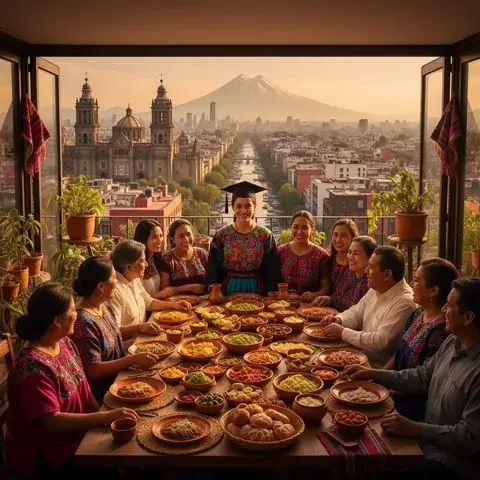
Día de Muertos, on November 1 and 2, is about remembering the people we love, not mourning them. If you live far from your family's ofrenda, a short message in Spanish can bring you back to the table. This guide has ideas for what to say and how to make it feel personal.
What a good Día de Muertos message includes
- A name and a memory. Mention one person you are remembering and something they loved: their favorite pan de muerto, their jokes, their music.
- A sense of place. The marigolds (cempasúchil), the candles, the smell of copal, the kitchen on the day before.
- Gratitude, not just grief. Say what they taught you.
Phrases you can adapt
- Feliz Día de Muertos. Hoy te recuerdo con mucho cariño. (Happy Day of the Dead. Today I remember you with much love.)
- Gracias por enseñarnos a celebrar la vida. (Thank you for teaching us to celebrate life.)
- Aunque estemos lejos, esta noche estamos juntos en el recuerdo. (Though we are far apart, tonight we are together in memory.)
A story instead of a text
ShareGreet can turn a sentence like “Tell my family I am thinking of abuela today, the way she made tamales every November and sang while she cooked” into a short illustrated story with Spanish narration. Choose a gentle style such as Watercolor or Storybook, review the script, then share the link on WhatsApp. Nobody needs to install anything to watch.
Three prompts to adapt
- For a grandmother: “Tell my family I am thinking of abuela today. Mention the tamales she made every November and how she sang while she cooked.”
- For a parent: “Say that I place my father's photo on my small ofrenda every year, with his favorite pan de muerto, and that I tell my children his stories.”
- For the whole family: “Send a message to my relatives in Michoacán. Say that although I live far away, I light a candle for everyone we remember tonight.”
What the day means
Día de Muertos blends Indigenous traditions with Catholic observances. Families build an ofrenda, an altar with photographs, candles, marigolds, food and the favorite things of those who have died, and visit cemeteries to share a meal with their memory. It is a celebration of life and relationship, which is why the tone of a good message is warm and often has humor in it.
Choosing a tone
- Tender: choose Watercolor or Storybook, and keep the narration slow and gentle.
- Celebratory: choose a more colorful style, and include a cheerful memory, not just grief.
- For children: a story style helps explain the tradition to younger relatives.
A respectful checklist
- Use the person's name and your relationship to them.
- Mention a real tradition from your own family rather than a generic one.
- Listen to the narration once and edit anything that sounds off.
- Send it on November 1 or 2, when the family is already thinking of them.
A note on tone
Keep it warm and respectful. Read the generated script aloud before sending, and edit anything that does not sound like your family. If you have relatives who speak Portuguese rather than Spanish, see our guide to Spanish and Portuguese greeting videos.
Frequently asked questions
Can ShareGreet narrate in Spanish?
Yes. Spanish is one of the languages ShareGreet supports for narration and on-screen text.
Can I edit the script before it is generated?
Yes. You review and edit the script scene by scene before anything is rendered.
More articles
- Greet My Circle: Send Every Festival Wish in One Minute, in Everyone's Language
- AI Video Styles: 37 Looks From Realistic and Anime to Clay and Watercolour
- AI Video Prompt Builder: Write a Better Prompt for Any Video Tool
- Which AI Video Tool Should I Use? A Simple Guide to Every ShareGreet Video Maker
- Replace a Character in a Video With AI: Swap a Person for a Pet, Toy or Cartoon