
Australian Cards: Australia Day, Anzac Day, a Summer Christmas, and Diwali and Eid Wishes
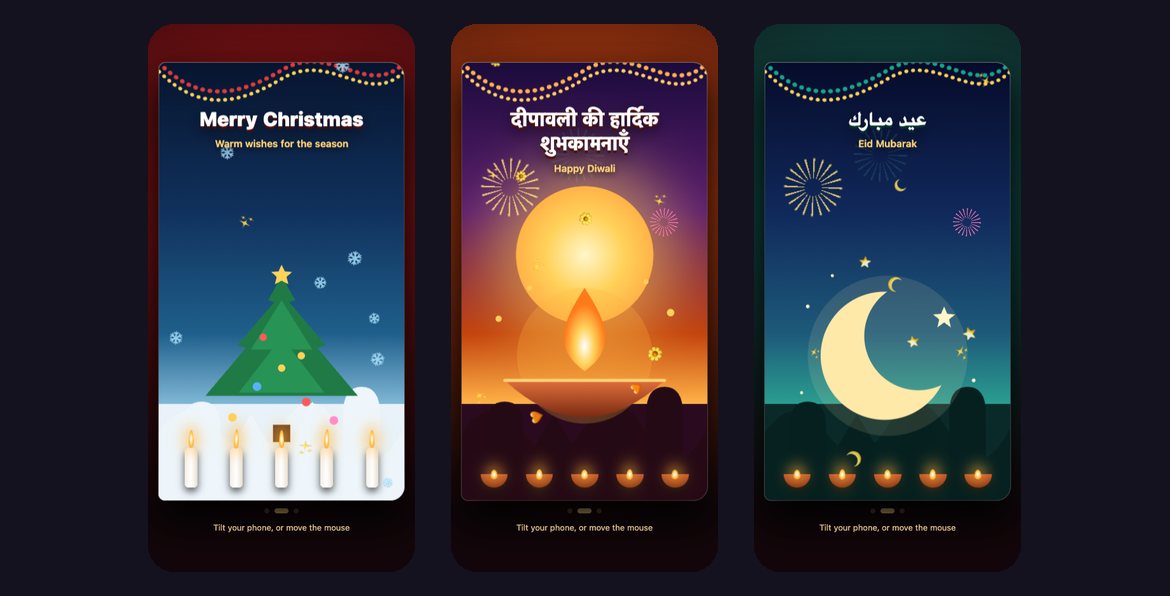
Christmas in Australia arrives in summer, Anzac Day falls in autumn, and many families here come from somewhere else and mark Diwali or Eid as well. A pop-up card is a quick way to cover each date, and it works for family on the other side of the world because it opens in a browser and costs nothing.
Example: Claire writes to family in England, and to her neighbours
This is an example, not a customer story.
A summer Christmas for family overseas
- Open the Create tab and choose Pop-up card.
- Pick the Christmas card. Its scene is a snowy tree, so the line you write can make the joke: Merry Christmas from 35 degrees! Prawns on the barbecue, thinking of you in the cold.
- Add the name and tap Make my card.
Time zones matter for family in Europe: Sydney is 10 to 11 hours ahead of the UK, so a card sent on your Christmas morning arrives for them the night before. Send it in the evening your time if you want them to find it in the morning.
Diwali and Eid wishes
The same card maker has a Diwali scene with a diya and an Eid scene with a crescent moon. Write the message in the family's language, and let them answer with a voice note or a short video. For Diwali wording, see Diwali greetings for family abroad.
Anzac Day, 25 April
Anzac Day is a day of remembrance and a plain, short message suits it: Lest we forget. or Thinking of my grandfather today. Choose a quiet, simple card rather than a festive scene.
Australia Day, 26 January
People mark this date in different ways, and some prefer not to mark it. If you send a card, keep to what you mean: a message to a friend for the long weekend, or a thank-you to a neighbour, rather than a slogan.
Quick Aussie wording
- Happy Christmas to the best mates a person could have.
- Thanks for having us, it was a ripper day.
- Hope the barbie goes well. Save me a snag.
Pop-up cards are free, and you can make up to 15 a day. For Christmas wording, see Christmas wishes for family and Christmas greetings for family abroad.
Frequently asked questions
When is Anzac Day?
On 25 April every year.
When is Australia Day?
On 26 January.
Can I send a Christmas card to family in the UK?
Yes. Make a pop-up card, write your message and send the link. They open it in a browser.
Can I send Diwali or Eid wishes?
Yes. The card maker has a Diwali scene and an Eid scene.
Is it free?
Yes. Pop-up cards use no credits.