
Greeting Family From the UK: Bonfire Night, Remembrance, Christmas, and Diwali Wishes to India
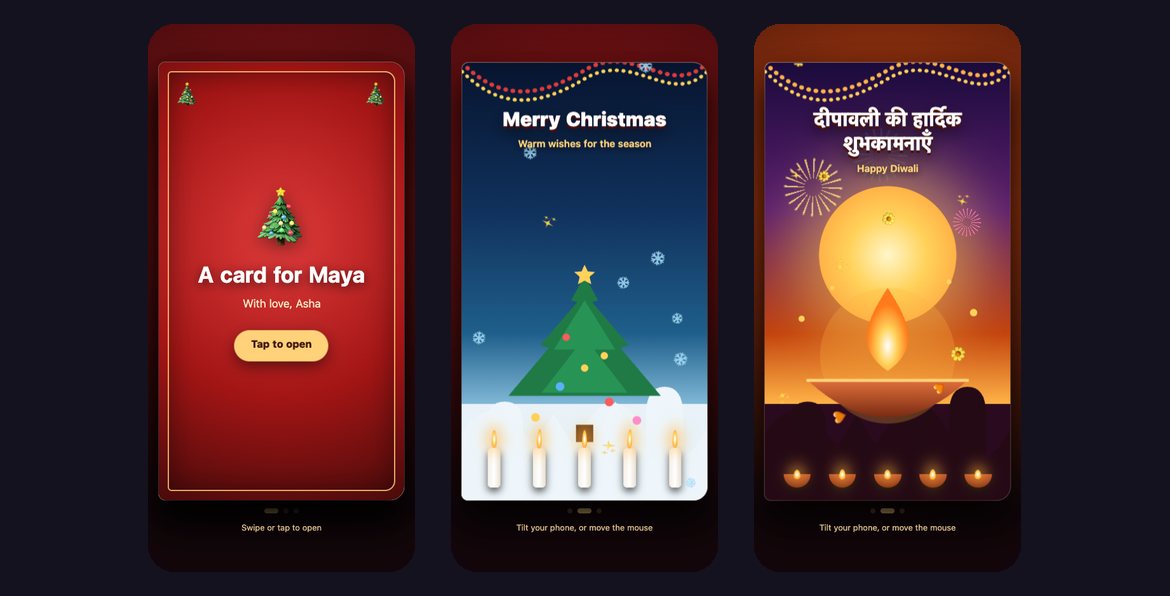
Living in the UK means two calendars. There is the British one, with bonfire night in early November, the poppy in the weeks around Remembrance Sunday and a Christmas that starts in November. And there is the one at home, with Diwali, Eid, Rakhi or Pongal, where the family back in India or Pakistan is waiting for your call. A short card for each takes a minute.
Example: three cards in November and December
These are examples, not customer stories.
Bonfire Night (5 November)
Not everyone gets a card for it, but a neighbour with children or a friend hosting a bonfire party likes one. Use the plain card maker and write: Wrap up warm and enjoy the sparklers. See you at the fireworks on Saturday. The Midnight theme suits it.
Remembrance Sunday
Remembrance Sunday is the Sunday nearest 11 November. A card is not usual, and a short message to a family member who served, or who lost someone, is kind: Thinking of you today, and of everyone we remember. Keep it quiet and plain. A simple theme with no festive decoration fits better than a bright one.
Christmas
- Open the Create tab and choose Pop-up card.
- Pick the Christmas card.
- Write: Merry Christmas from all of us in Leeds. Save us a mince pie and we will see you on Boxing Day.
- Tap Make my card and send the link.
Diwali and other festivals, to family in India
The same pop-up card has a Diwali scene with a glowing diya. For a greeting that sounds right, write it in the family's language: Hindi, Gujarati, Punjabi, Tamil and others work in the card. If you are not sure of the wording, Help me write can draft it.
- Time difference. India is 5 hours 30 minutes ahead of the UK in winter, and 4 hours 30 minutes ahead in summer. Send the link in the evening so it is waiting for them in the morning.
- Let them answer in their own voice. They can send back a voice note or a short video, which is often better than a text for older relatives.
- Write one card per household, with the right names, rather than one card for the whole family.
For wording, see Diwali greetings for family abroad, Christmas greetings for family abroad and staying close to family abroad.
Pop-up cards are free and use no credits. You can make up to 15 cards a day.
Frequently asked questions
When is Bonfire Night?
Every year on 5 November.
When is Remembrance Sunday?
It is the Sunday closest to 11 November.
Can I send a Diwali card to India from the UK?
Yes. Make a pop-up card with the Diwali scene, write the message in the family's language and send the link.
Does the family need an app?
No. They open the link in a browser, and can reply with a voice note or a short video.
Is it free?
Yes. Pop-up cards use no credits.